Nutrition
Stronger, Leaner, Better

JoAnn Gibson · NASM Certified Personal Trainer and Nutrition Coach
If you want to lose fat, feel more energetic, and improve body composition after menopause, make protein a daily priority.
Read the short version
Protein is what your body uses to keep and rebuild muscle, and it keeps you full. After menopause, muscle gets easier to lose, so protein has to be planned, not left to chance.
- Aim for about 1 gram of protein for each pound of your desired or optimal body weight. At 130 pounds, that is about 130 grams a day.
- Spread it over three meals and one snack.
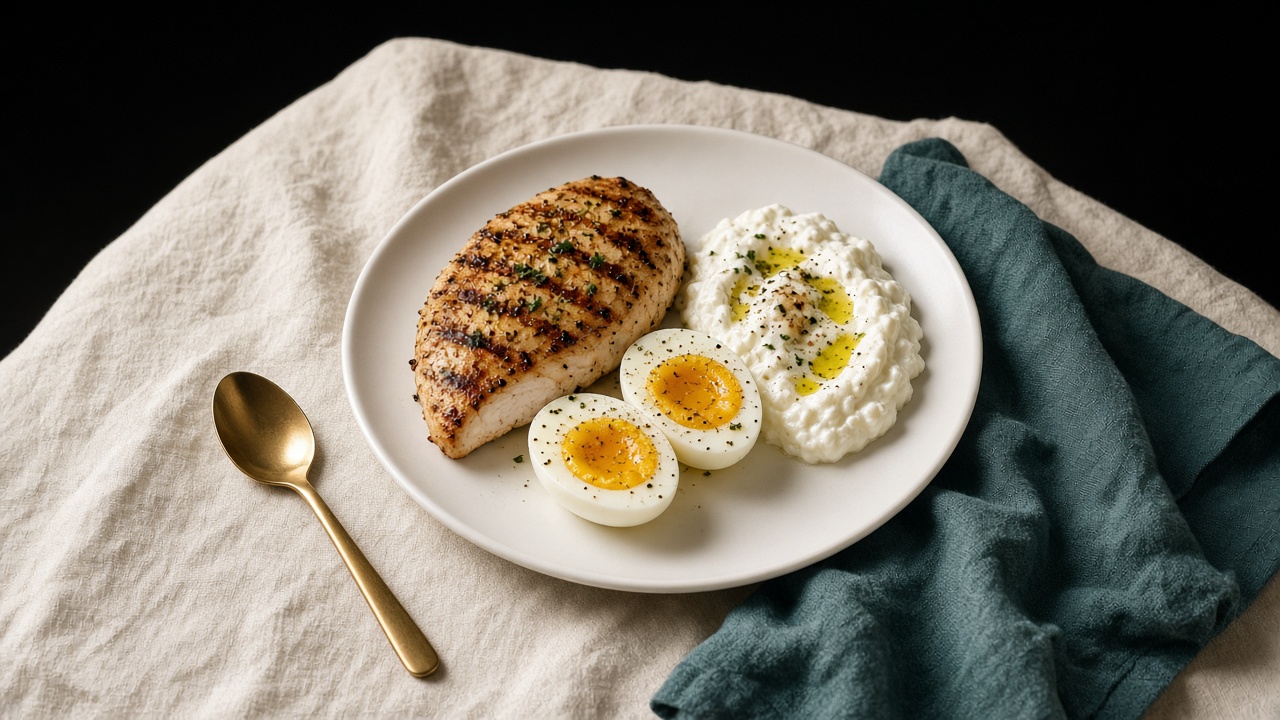
- Start breakfast with 25 to 30 grams from chicken, eggs, fish, Greek yogurt, or whey.
- Get another 25 to 35 grams at dinner.
- A shake right after a workout matters less than your total for the day.
Beans, oats, and nuts count too. Pair them, like beans with rice, and plan on eating a little more.
Put the protein on the plate first. Then build the rest of the meal.
Prioritize Protein After Menopause: The Macro That Protects Muscle and Metabolism
If you want to lose fat, feel more energetic, and improve body composition after menopause, make protein a daily priority.
Protein supplies amino acids—the building blocks your body uses to repair tissue, maintain lean mass, and adapt to strength training. It also helps regulate appetite: higher-protein meals tend to keep you fuller longer, which can make calorie control easier without constant willpower.
As you get older, preserving muscle matters more. Muscle is metabolically active tissue. It supports strength and mobility, helps with blood sugar regulation, and contributes to how many calories you burn at rest. When lean mass declines, metabolism often slows, energy can dip, and fat gain becomes easier.
Why Protein Matters More After Menopause
Many adults begin losing muscle with age (sarcopenia), and the pace often increases in midlife. For women, hormonal changes during perimenopause and menopause can make body-composition shifts more noticeable, which is one reason protein and strength training become even more important.
The takeaway is simple: if you want strength, better metabolic health, and a leaner physique, you can’t treat protein like an afterthought. Plan for it.
Complete vs. Incomplete Protein (Quality Matters)
Two people can eat the same number of grams of protein and get different results depending on quality.
There are 20 amino acids, and 9 are essential—your body can’t make them, so you must get them from food. A complete protein contains all essential amino acids in adequate amounts to support muscle repair and muscle protein synthesis.
Reliable complete sources include:
- Chicken, turkey, beef
- Eggs
- Fish and seafood
- Dairy (especially Greek yogurt)
- Whey protein
Many plant foods are incomplete on their own (for example, beans, oats, nuts, and many vegetables). If you follow a plant-forward or plant-based pattern, you can still cover all essential amino acids by combining complementary sources (such as beans and rice or hummus and whole-grain pita). In practice, this often requires more planning—and sometimes more total food—to hit the same protein target.
How to Build Your Day Around Protein
Use protein as your anchor at each meal.
1. Know your target
2. Spread it out
Instead of “saving” protein for dinner, distribute it across the day. A simple structure is:
- 3 protein-centered meals
- 1 high-protein snack
3. Prioritize breakfast
Start the day with 25–30 grams of complete protein. This supports muscle-building signals early and can make appetite and energy more stable later in the day.
4. Don’t obsess over workout timing
The idea that you must drink a shake within an hour of training is less important than people think. Total daily protein and consistent intake across meals matter most. Recovery unfolds over many hours.
5. Aim for a solid protein serving at dinner
Dinner is another strong opportunity for 25–35+ grams of protein to support recovery, satiety, and overnight repair.
The Bigger Picture
When protein intake is too low, it becomes harder to preserve muscle, manage hunger, and maintain metabolic health. That often leads to more cravings, more overeating, less energy, and slower progress.
Build each meal around a high-quality protein source, and you give your body what it needs to stay strong, lean, and resilient—especially after menopause.
If you want a plan for your week
That is the consult. Thirty minutes. Nothing to pay before we talk.